
The problem: your home should be calming, but it doesn’t feel that way
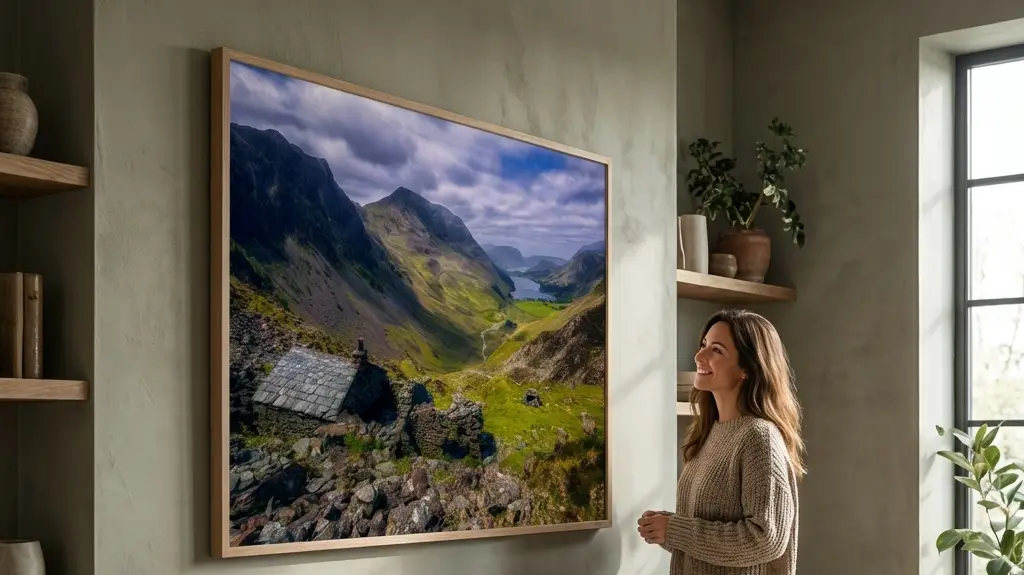
You’ve probably asked yourself a version of this question before:
“Why doesn’t my home actually help me relax?”
“Can art really make a difference to how I feel?”
“What should I put on my walls if I’m always stressed?”
You’re not alone. Most people hang art because a blank wall feels unfinished. They buy something that looks nice—a generic canvas from a home goods store, a motivational quote, a print that matches the sofa. And then they wonder why it doesn’t actually do anything for their mood.
The problem isn’t you. The problem is that most art is chosen for its appearance, not its psychological effect. It’s designed to be looked at, not lived with.
According to Neurodecorating®—our UK-registered trademark that applies cognitive psychology to art selection—the right art can actively lower your stress levels. The wrong art can keep your nervous system quietly agitated, even if you don’t consciously notice.
This guide will walk you through the science of how art affects stress, what your brain needs to down-regulate, and four specific printable art downloads you can use to transform your space into a genuine sanctuary.
Part 1: How art affects your stressed brain
Before we talk about specific pieces, let’s understand the neuroscience.
The science of visual stress
Your brain never stops processing what your eyes see. Every object, color, and line in your peripheral vision is being subconsciously evaluated for safety, threat, or reward. This happens whether you’re paying attention or not.
Here’s what that means for your walls:
| Type of Art | Brain’s Subconscious Response |
|---|---|
| Chaotic patterns, jarring contrasts, threatening imagery | “Something’s wrong. Stay alert.” → Stress response elevated |
| Balanced compositions, soft colors, familiar subjects | “Everything is fine. You can rest.” → Stress response lowered |
This isn’t spiritual woo. It’s evolutionary neuroscience. Your brain is always scanning for danger, even when you’re “relaxing.” The art on your walls is part of that scan.
What a stressed brain needs
For someone dealing with anxiety, racing thoughts, or chronic stress, the Sanctuary-Seeker archetype is almost always the relevant one. Here’s what your brain is looking for:
1. Low contrast
High-contrast images (pure black next to pure white, jarring color combinations) activate the brain’s orienting response. Your brain essentially says, “Something important just happened—pay attention.” That’s great for a movie poster in a living room. It’s terrible for a space where you’re trying to down-regulate.
2. Organic, flowing shapes
Hard geometry (sharp angles, perfect grids, aggressive lines) signals artificiality and demand. Organic, flowing shapes (curves, fluid forms, natural silhouettes) signal safety and ease.
3. Calming colors
Research consistently shows that muted blues, soft greens, warm earth tones, and gentle creams lower heart rate and reduce cortisol. Avoid bright reds, neon colors, and high-saturation primaries in spaces meant for relaxation.
4. Familiar, grounding subjects
Completely non-representational abstract art can feel unresolved to a brain seeking safety. Landscapes, gentle wildlife, and natural scenes provide the brain with familiar visual patterns that signal “this environment is safe.”
5. Expansive landscapes
A landscape photograph—rolling hills, a calm lake, a misty coastline—creates visual depth. Your brain processes the horizon line and the receding distance, and in that processing, the room itself feels larger. This is the same principle that makes a mirror expand a space, but a landscape adds soft fascination: the gentle, effortless attention we give to nature.
Part 2: Four printable art prints prescribed for stress reduction
Now let’s get practical. Here are four digital wall art downloads from our collection, each specifically chosen to lower stress and cultivate calm.
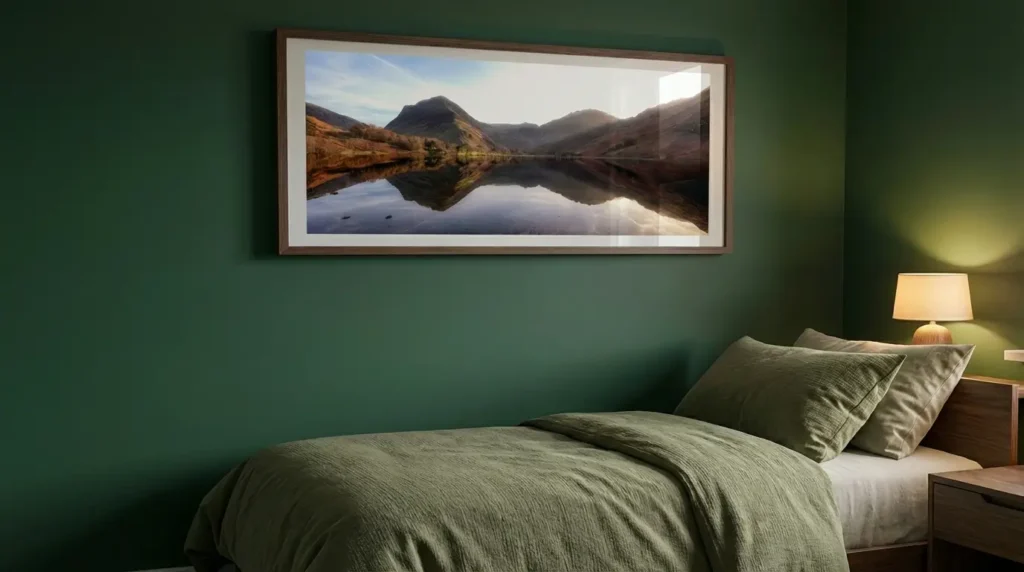
Print #1: “Autumn Reflections in Buttermere” by Michael Paul Bennett
Artist: Michael Paul Bennett (UK landscape and abstract photographer)
Style: Landscape photography, mirror reflections
Palette: Muted autumn oranges, soft browns, gentle greens
Best for: The Sanctuary-Seeker who needs visual expansion and stillness
Why this print works for stress reduction
This photograph captures the perfect mirror-like stillness of Lake Buttermere in the Lake District. The autumn mountains and landscape reflect with absolute symmetry in the still waters below.
Here’s the neuroscience: your brain finds deep rest in reflective symmetry. There’s no puzzle to solve, no hidden detail to process, no demand to figure out what you’re looking at. The eye simply rests on the balanced composition. The two halves of the image mirror each other, and your brain mirrors that balance internally.
The soft autumn colors—muted oranges, browns, and greens—are naturally grounding. Unlike bright, saturated colors that stimulate, these muted earth tones signal seasonal transition, rest, and the beauty of letting go.
The horizontal format (wider than it is tall) emphasizes the horizon line, creating a sense of expansive openness. This is the visual equivalent of a deep, slow breath.
Neurodecorating® prescription
“This tranquil landscape is prescribed for the Sanctuary-Seeker as a visual anchor for calm. The mirror-like stillness of Buttermere invites the eye to settle and the mind to follow. The perfect symmetry of water and sky lowers cortisol and creates a sense of ordered tranquility. The expansive horizon tricks the brain into feeling more space than exists, reducing feelings of confinement. Ideal for bedrooms, meditation spaces, or anywhere stress needs to dissolve into stillness.”
Where to place it
- Across from or at the side of your bed: So it’s the last thing you see before sleep and the first thing you see upon waking
- In a meditation corner: The symmetry supports mindfulness practice
- Size recommendation: 15″ x 10″ up to 45″ x 30″ (the larger, the more immersive)
- Framing: Simple light wood or white frame. Avoid dark, heavy frames.
👉 Download “Autumn Reflections in Buttermere” here
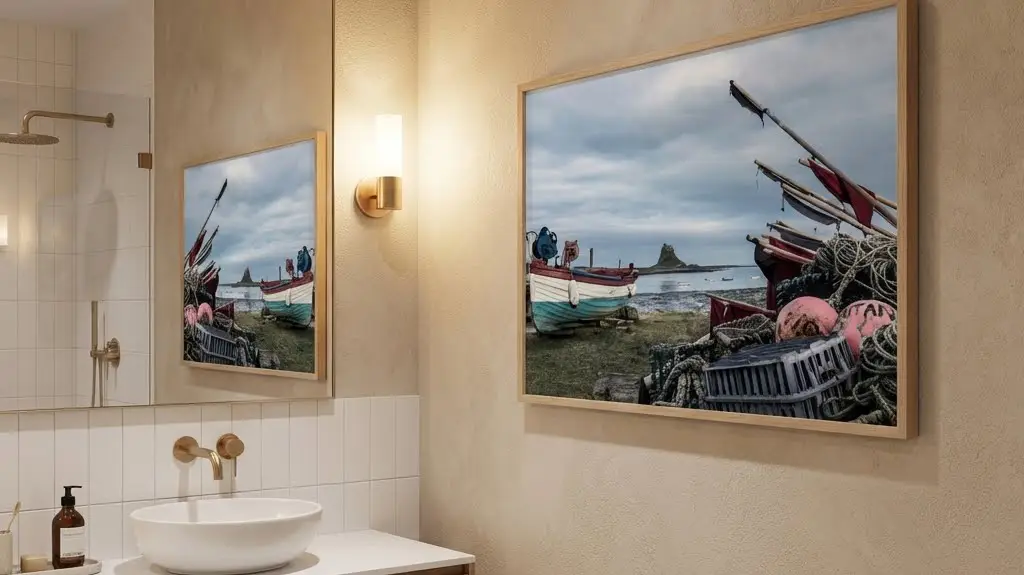
Print #2: “Holy Island Lobster Pots” by Mark Marsh
Artist: Mark Marsh (Travel photographer)
Style: Coastal documentary photography
Palette: Muted browns, soft greens, gentle greys, natural earth tones
Best for: The Sanctuary-Seeker whose stress comes from the pressure to constantly do
Why this print works for stress reduction
This is not a dramatic seascape. There are no crashing waves, no dramatic cliffs, no sunset heroics. Instead, this quiet, contemplative scene shows lobster pots stacked on a beach, with Lindisfarne Castle (Holy Island) in the soft distance.
Here’s what makes this image so powerful for stress reduction: the ritual of waiting.
Lobster pots are tools of patient expectation. Fishermen set them and leave them, trusting the tide, trusting the process, trusting that something will arrive in its own time. For a stressed brain that feels the need to control everything, to hustle, to make things happen, this image offers a visual lesson in patience, trust, and the quiet productivity of stillness.
The composition has depth without drama. The foreground pots anchor the eye. The mid-ground beach creates space. The distant castle provides a gentle focal point that doesn’t demand attention. The muted, natural colors (browns, greens, soft greys) are inherently grounding—they don’t compete with each other or with your nervous system.
Unlike a generic bird or flower, this is a distinctive image. You won’t find free alternatives online. It has character, story, and a unique visual identity that rewards quiet attention.
Neurodecorating® prescription
“This quiet coastal scene is prescribed for the Sanctuary-Seeker whose stress comes from the pressure to constantly do. The lobster pots—patient, still, trusting the tide—model a different way of being: waiting is not wasting. The distant castle adds depth without demand. The muted, natural colors lower heart rate without drawing attention to themselves. Displayed in a study, hallway, or bathroom, this image reminds you that some of the most valuable things in life arrive not through force, but through patient stillness.”
Where to place it
- In a hallway: A moment of quiet pause as you move through your home
- In a home office: A reminder that not everything requires immediate action
- In a bathroom: The spa-like calm of patient waiting
- Size recommendation: 15″ x 10″ up to 45″ x 30″
- Framing: Simple natural wood or black frame
👉 Download “Holy Island Lobster Pots” here
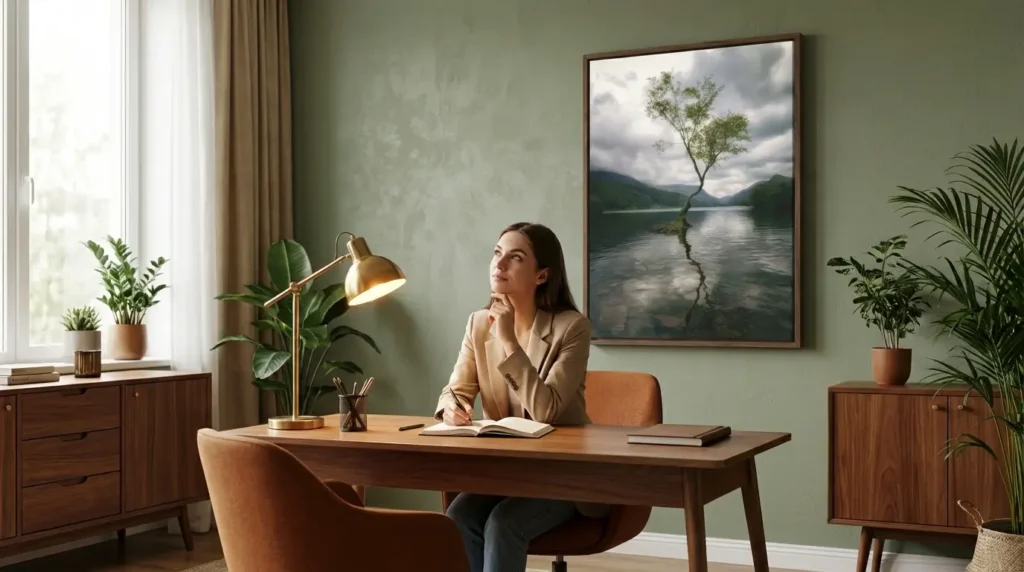
Print #3: “The Lone Tree of Llyn Padarn” by Michael Paul Bennett
Artist: Michael Paul Bennett (UK landscape photographer)
Style: Minimalist landscape photography, stark silhouette
Palette: Dark silhouette against soft grey water and cloudy autumn sky
Best for: The Sanctuary-Seeker who carries their stress silently and alone
Why this print works for stress reduction
The lone tree standing in still water is one of the most powerful visual metaphors for resilience and groundedness.
Unlike the abundant, expansive landscape of Print #1, this image is stark, simple, and almost meditative in its minimalism. The tree stands alone—yet perfectly reflected. The reflection suggests wholeness, not loneliness. The tree is solitary but complete.
The cloudy autumn sky adds mood without drama. The dark silhouette against soft grey water creates high contrast but low complexity. The brain processes it instantly, leaving no cognitive residue. There’s nothing to figure out, nothing to decode, no hidden meaning to search for. It simply is.
For a stressed Sanctuary-Seeker who feels isolated in their anxiety, this image offers a different frame: solitude is not the same as loneliness. Standing alone can be an act of quiet strength. Being still in still water creates a perfect reflection of who you are.
Neurodecorating® prescription
“This lone tree photograph is prescribed for the Sanctuary-Seeker who carries their stress silently. The tree’s solitary stance against the water models quiet resilience—strength that doesn’t need to announce itself. The perfect reflection suggests wholeness, not isolation. The stark minimalism lowers cognitive load, giving a stressed brain nothing to process except the simple fact of the tree’s existence. Displayed in a bedroom, study, or reading nook, it serves as a daily reminder that stillness is not emptiness, and that standing alone can be an act of profound peace.”
Where to place it
- In a bedroom: A quiet companion for sleepless nights
- In a reading nook: Visual stillness to match the stillness of reading
- In a study: A reminder that depth comes from solitude
- Size recommendation: 10″ x 15″ up to 30″ x 45″
- Framing: Simple black frame to emphasize contrast, or floating frame for a modern look
👉 Download “The Lone Tree of Llyn Padarn” here
Print #4: “Beautiful Lotus Flower” by Bobo Hui
Artist: Bobo Hui (floral and fine art photographer)
Style: Botanical photography, soft focus, symbolic composition
Palette: Soft purples, gentle pinks, muted greens, warm creams
Best for: The Sanctuary-Seeker who needs a symbol of hope and resilience
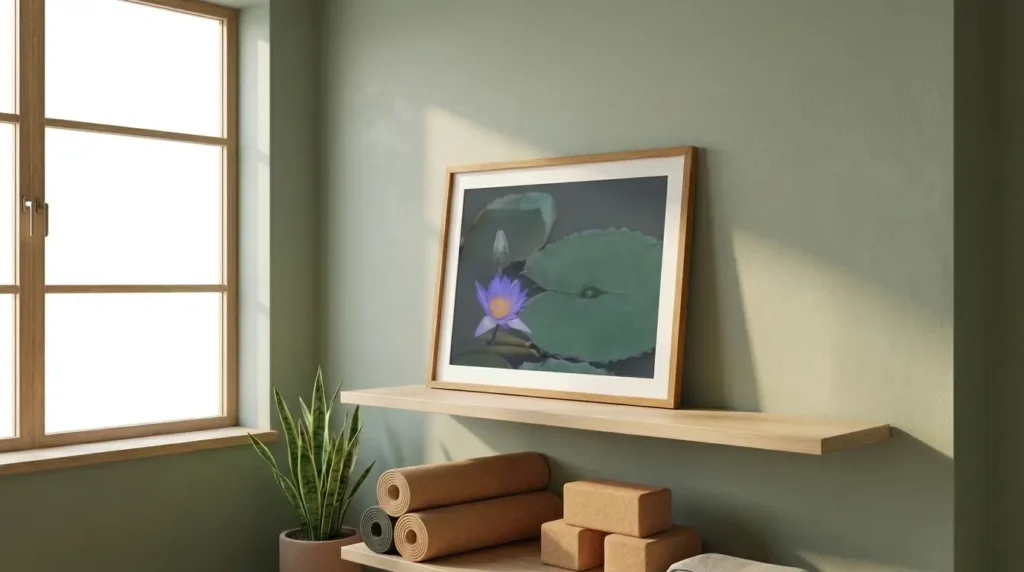
Why this print works for stress reduction
The lotus is one of the most psychologically potent symbols in art. Rising from mud to bloom untainted, it represents resilience, purity, and the possibility of peace amidst chaos.
For a stressed brain, this image offers a metaphor of hope—that calm is possible even when circumstances are murky. The lotus doesn’t fight the mud. It doesn’t try to clean it. It simply rises through it and blooms above it. This is a profound visual lesson for anyone dealing with anxiety: you don’t have to fix everything around you to find peace. You can rise.
The soft purple and pink hues are naturally soothing. Purple is associated with spirituality, calm, and introspection. Pink is associated with nurturing, warmth, and gentle care. Together, they create an emotional palette of soft hope.
The simple, centered composition provides a clear focal point for meditation. Unlike a busy landscape or a complex abstract, this image gives the eye one place to rest. The text accompanying the original artwork describes the lotus as “a small gentleman of the pond”—elegant, quaint, and dignified. That gentleness is precisely what a stressed nervous system needs.
Neurodecorating® prescription
“This lotus photograph is prescribed for the Sanctuary-Seeker who needs a symbol of resilience and hope. The flower’s rise from muddy waters to pure bloom mirrors the brain’s capacity to find calm amidst chaos. The soft purple tones and centered composition create a meditative focal point—one place for the eye to rest, one image for the mind to return to. The lotus does not fight its environment; it rises through it. Displayed in a bedroom, yoga space, meditation corner, or therapy office, this image offers the quiet assurance that peace is always possible, even when circumstances are not ideal.”
Where to place it
- In a meditation or yoga space: A natural focal point for practice
- In a therapy office: A symbol of hope and resilience for clients
- In a bedroom: A gentle reminder before sleep that tomorrow is new
- Size recommendation: A4 (print at home) up to 20″ x 28″ (professionally printed)
- Framing: Simple white or light wood frame. Let the image breathe.
👉 Download “Beautiful Lotus Flower” here
Part 3: Practical printing and display guide for stress reduction
You’ve chosen your art. Now let’s talk about bringing it to life. Because The Art of Digital Living® gives you complete control—and that control is itself a stress reducer.
Paper choices for stress reduction
| Paper Type | Effect on Mood | Best For |
|---|---|---|
| Matte fine-art paper | Soft, calm, non-reflective (no glare = less visual agitation) | All Sanctuary-Seeker applications |
| Textured watercolor paper | Warm, organic, handmade feel | Lotus and botanical prints |
| Smooth matte photo paper | Clean, modern, crisp | The Lone Tree (contrast pops without glare) |
| Glossy | Avoid. Reflections are subtly agitating. | Not recommended for stress-reduction spaces |
Framing recommendations for calm
- Thin, simple frames: Black, white, or natural wood. Ornate frames add visual weight and cognitive load.
- Floating frames: Excellent for the Lone Tree—creates the illusion that the image is hovering, adding depth without complexity.
- No frame (gallery wrap on canvas): Works well for the Buttermere reflection, but ensure the edges are clean.

Sizing guidelines for stress-reduction spaces
| Room Type | Recommended Print Size | Number of Pieces |
|---|---|---|
| Small bedroom (8′ x 10′) | 12″ x 16″ to 16″ x 20″ | 1-2 |
| Meditation space | 16″ x 20″ to 20″ x 28″ | 1 (one confident focal point) |
| Home office | 15″ x 10″ (landscape) to 20″ x 30″ | 1-2 |
| Bathroom | 8″ x 10″ to 12″ x 16″ | 1 |
Golden rule for stress reduction: One larger piece is almost always better than several small pieces. Small pieces create visual clutter. One confident piece creates calm focus. Your stressed brain doesn’t need more things to process.
Hanging height for relaxation
Standard gallery height is 57-60 inches from the floor to the center of the artwork. But for stress-reduction spaces:
- If you view it standing: Use the standard height.
- If you view it lying in bed or sitting in a meditation posture: Center the art at approximately 55 inches from the floor (slightly lower, because your eye line is lower).
Part 4: Frequently asked questions about using art for stress reduction
Q: Can digital wall art really help with anxiety, or is that marketing?
It’s neuroscience. Your brain never stops processing what your eyes see. The art on your walls is part of that subconscious scan. Choose art that signals safety, calm, and predictability, and your nervous system can finally down-regulate. Choose art that signals chaos or threat, and your stress response stays elevated. This isn’t marketing—it’s evolutionary biology.
Q: How quickly will I notice a difference?
That depends on your current environment. If you’re replacing art that was actively agitating (chaotic abstracts, high-contrast cityscapes, threatening imagery), you may notice a difference within days. If you’re starting from blank walls, give it two weeks of living with the art before you assess.
Q: Can I mix different artists and styles in a stress-reduction space?
Yes, but with intention. All four prints in this guide share:
- Muted, natural color palettes
- Low cognitive load (easy to process)
- Calming, grounding subjects
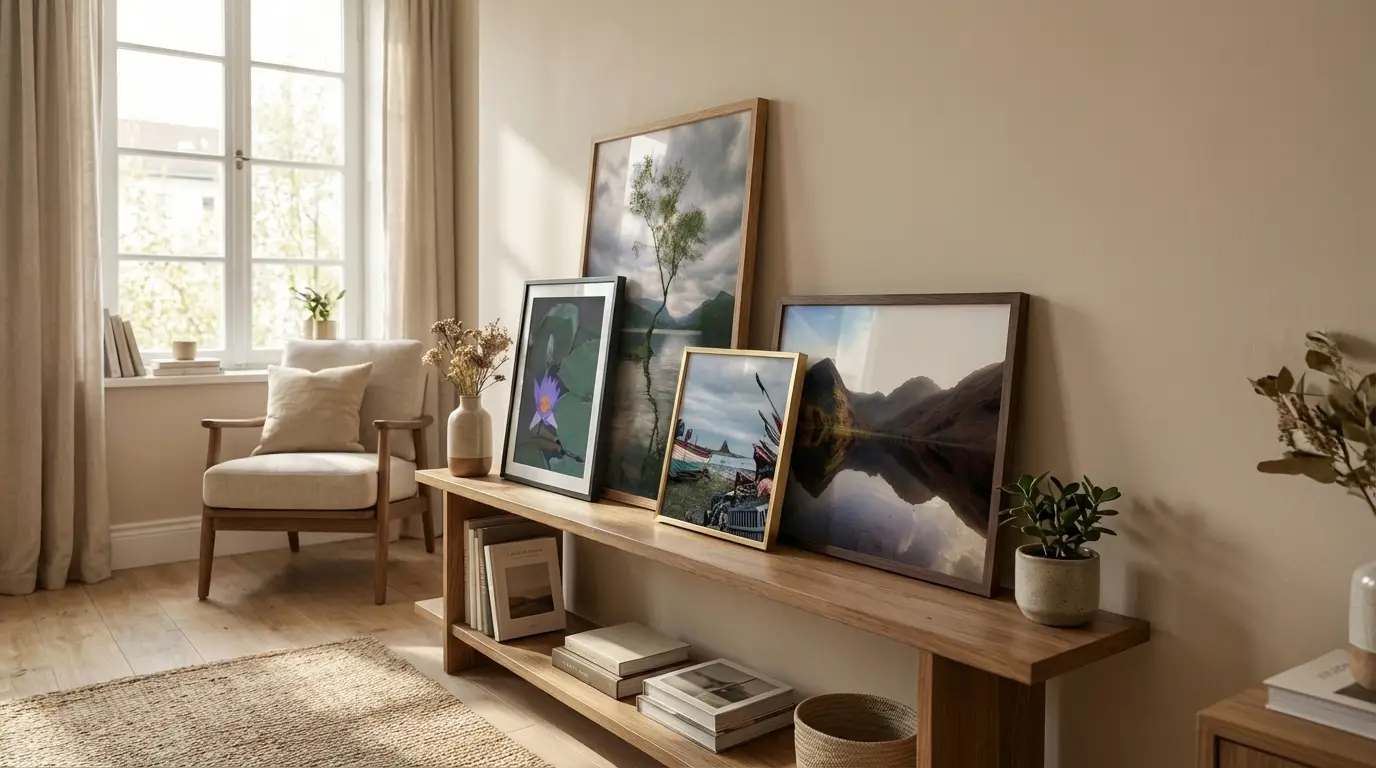
A mix of Buttermere (expansive) + Lobster Pots (patient) + Lone Tree (solitary) + Lotus (hopeful) creates a range of calming emotions, not a clash.
Q: What if I rent and can’t put nails in the wall?
The Art of Digital Living® has you covered. Because these are digital downloads, you can:
- Use removable adhesive strips (Velcro-style) for lightweight prints
- Lean larger prints on a dresser or shelf (no wall damage)
- Use a magnetic poster hanger (no frame, no nails)
Q: Is printable art really as good quality as a store-bought print?
Yes—better, in many ways. Our files are mastered at 300 DPI, the industry standard for gallery-quality printing. When printed professionally on fine-art paper, the result is indistinguishable from a premium store-bought print. The difference is that you control the process, you eliminate waste, and you pay a fraction of the price.
Part 5: Why The Art of Digital Living® matters for stress reduction
There’s one more layer to this, and it matters more than you might think.
The Art of Digital Living® is our philosophy that art should be:
- Sustainable: No mass production, no inventory, no global shipping. Just a file, printed locally.
- Flexible: Print it at A4 today. Print it at 30″ x 45″ next year when you move to a bigger space. The same file, infinite possibilities.
- Instant: No waiting weeks for delivery. No wondering if it will arrive damaged. Your sanctuary starts now.
But here’s the deeper psychological benefit that most people miss: the act of choosing, printing, and framing your own art is itself a stress-reduction practice.
You’re not a passive consumer of someone else’s taste. You’re an active curator of your own environment. You decide the size. You decide the paper. You decide the frame. That agency—that control over your immediate surroundings—is profoundly calming to a nervous system that spends all day being told what to do, where to be, and how to perform.
Your stress-reduction sanctuary isn’t something you buy off a shelf. It’s something you build. And printable art is the tool that lets you build it your way, one print at a time.
Ready to transform your space into a stress-reducing sanctuary?
You now have everything you need: the neuroscience (how art affects stress), the specific prescriptions (four artist-approved prints), and the practical guide (paper, framing, sizing).
Your next step:
Browse our full collection of printable art for Sanctuary-Seekers and find the piece that calls to you.
Or, if you’re not sure which archetype you are, take our free Neurodecorating® quiz to discover whether you’re a Sanctuary-Seeker, Idea-Engine, Deep Thinker, or Curator.
👉 Take the Neurodecorating quiz here
👉 Browse all printable art
All artwork is available as an instant digital download. No physical items will be shipped. Frames shown are for illustrative purposes only. You print and frame to suit your exact needs.